Posted on November 14, 2026
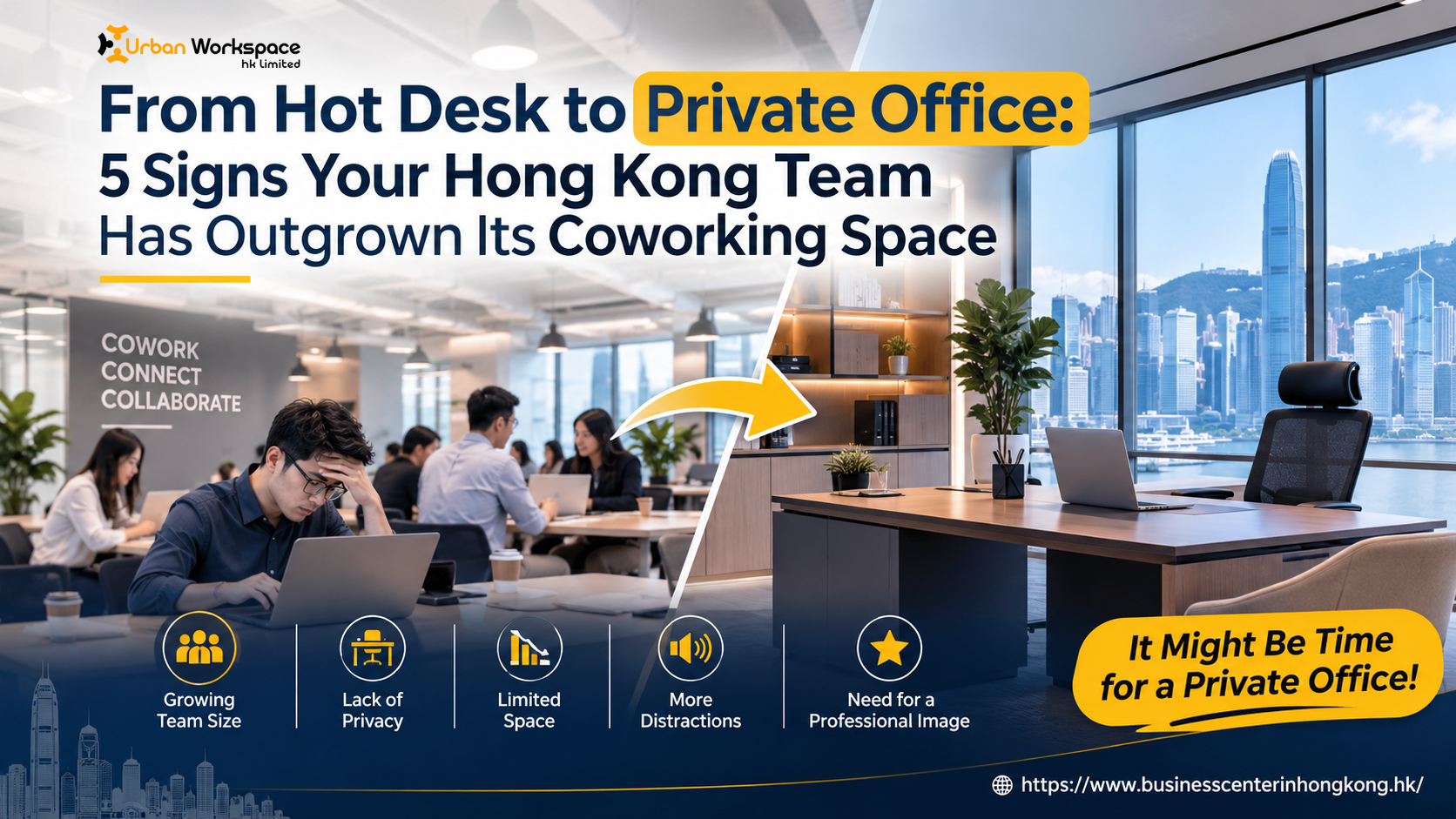
Coworking can be an effective way to establish a presence, keep overheads flexible and give a small team somewhere professional to work. But as a business grows, the same shared workspace that once made work easier can start creating friction. If your team is coordinating desk availability, searching for quiet places to speak with clients or struggling to work together consistently, it may be time to consider a dedicated desk or private office.
A co-working space in Hong Kong gives businesses access to a shared professional environment without taking on the responsibilities of setting up a conventional office from scratch. Depending on the provider and membership, teams may use hot desks, dedicated workstations, shared facilities and bookable meeting rooms.
That flexibility can be valuable for freelancers, consultants, startups, project teams and companies testing a new market. However, workspace needs are not static. A team that started with one or two people may later need regular attendance, secure conversations, storage, predictable meeting access and a place where colleagues can work side by side.
The decision to move does not have to be based on headcount alone. The more useful question is whether your current workspace supports the way your business operates today. Here are five signs that it may be time to review your options.
Hot desks are designed for flexible use. They can work well when employees visit on different days or when people do not need a fixed workstation. But when several team members need to work together regularly, finding available seats in the same area can become a recurring challenge.
Colleagues may arrive at different times, sit in separate parts of the workspace or spend the first part of the day looking for suitable places to work. Informal collaboration becomes harder when the team cannot easily sit together.
If the same employees work from the office most days, a dedicated desk in Hong Kong may provide a useful middle ground between a hot desk and a private office. It gives an individual a consistent workstation while retaining the shared environment.
If several employees need to work together, store equipment securely or hold regular internal discussions, a private office rental in Hong Kong may be more suitable. The right choice depends on team size, attendance patterns, privacy needs and budget.
Shared workspaces are designed for multiple members, so some background activity and conversation are part of the environment. That is usually manageable for independent tasks. It can become less suitable when employees regularly discuss sensitive commercial information, review client documents or handle private calls.
For example, a consultancy may need to discuss project fees, a recruitment business may handle candidate information, and a finance team may review confidential company records. Even when a coworking provider offers phone booths or bookable rooms, relying on them for frequent private conversations may interrupt the working day.
A private workspace can make it easier to manage day-to-day conversations and establish a consistent working environment. Businesses comparing a shared office space in Hong Kong with a private arrangement should check what privacy, access control and storage facilities are actually included. Do not assume that every serviced office has the same security features; confirm the details with the provider.
Occasional client meetings are easy to plan around a flexible workspace. The situation changes when your team regularly holds presentations, interviews, project reviews, board discussions or hybrid calls with participants in different locations.
If meeting-room availability determines when your team can speak to clients, the workspace may no longer be supporting your schedule effectively. Employees may need to book rooms far in advance, move meetings to cafés or spend time looking for a suitable place for a video call.
A serviced office in Hong Kong may be a practical option when a team needs a dedicated base and access to shared business facilities. Depending on the provider and package, these may include meeting rooms, reception support, internet connectivity and office equipment.
If your team does not yet need a private office, you may be able to retain a coworking membership and book meeting rooms in Hong Kong when required. Compare the room capacity, booking rules, hourly or full-day rates, available equipment and cancellation terms before deciding.
As a business develops, its workspace can become part of how it presents itself to employees, customers, suppliers and business partners. A shared environment may be perfectly appropriate for many companies. Others may eventually need a more consistent setting for welcoming visitors, displaying company materials or carrying out daily operations.
This does not mean that every growing company needs an expensive conventional lease. It means the business should consider whether its current workspace gives it the facilities and level of control it needs.
A furnished serviced office can offer a more established workspace while reducing the need to arrange every facility separately. Before signing, confirm what is included in the office package, such as furniture, internet, utilities, cleaning, reception services, access hours and meeting-room usage.
Hot desks are often selected because they offer flexibility. But the advertised membership price is only one part of the decision. A growing team may also pay for extra desk days, meeting-room bookings, storage, printing, day passes or alternative locations when the shared space does not meet its needs.
At the same time, employees may lose productive time moving between work areas, arranging calls or coordinating desk availability. These indirect costs can be difficult to see when reviewing a monthly membership invoice.
Before changing your arrangement, compare the total cost of the current setup with the full cost of a dedicated desk or serviced office in Hong Kong.
A private office is not automatically cheaper than coworking. The goal is to compare like with like and understand which arrangement provides the facilities your business actually uses. Ask the provider for a written breakdown of included services, additional charges and contract conditions.
There is no single best workspace for every business. The right arrangement depends on how often employees attend, how much privacy they need, whether they receive visitors and how predictable their workspace requirements are.
| Workspace type | Often suitable for | What to consider |
|---|---|---|
| Hot desk | Individuals, occasional users and teams with flexible attendance | Desk availability, booking rules, access hours and shared-space environment |
| Dedicated desk | Individuals who need a consistent workstation | Assigned desk terms, storage, access and shared facilities |
| Private office | Small teams needing their own enclosed work area | Capacity, privacy, furniture, contract length and included services |
| Serviced office | Businesses wanting a furnished office with selected support services | Reception, internet, utilities, meeting access, service charges and flexibility |
When comparing coworking vs serviced office options, look beyond the labels. Providers use different membership structures and package inclusions. Ask for the exact facilities, access rights and fees attached to the workspace you are considering.
Once you recognise that your current arrangement may no longer fit, assess the next workspace against your real operating requirements. A structured review can help prevent moving into an office that is either too small or more expensive than necessary.
Count the people who need to work from the office on a typical day, not only the total number of employees. Consider whether attendance is likely to increase over the next year.
List the types of conversations, calls and meetings your team handles each week. Decide whether bookable rooms are sufficient or whether an enclosed office is needed for routine work.
Consider the journey for employees, clients and suppliers. If you regularly welcome visitors, check the building entrance, reception arrangements, transport connections and ease of finding the office.
Ask whether furniture, internet, utilities, cleaning, reception, meeting-room access and other facilities are included or billed separately. Confirm any limits on usage.
Check the minimum commitment, deposit, notice period, renewal process and options to add or reduce workspace as your team changes. A flexible arrangement can be valuable when business requirements are still developing.
If possible, view the actual office or workstation. Check desk sizes, lighting, noise levels, meeting facilities, shared areas and the general working environment. Ask which facilities are available at the specific location and whether they require advance booking.
Your business does not have to move directly from a hot desk into a large traditional office. Depending on your requirements, a dedicated workstation, private studio or serviced office in Hong Kong may provide a more suitable next step.
Business Center in Hong Kong offers workspace options for different working styles, including co-working space in Hong Kong and serviced office facilities. Explore the available options and compare the facilities, locations and terms before choosing the arrangement that fits your team.
A business should consider moving when employees need consistent workstations, more privacy, secure storage, regular team collaboration or reliable access to meeting facilities. The decision should be based on working patterns and operational needs rather than headcount alone.
A hot desk is generally a workspace used on an available or bookable basis, while a dedicated desk is assigned to a particular member. Exact arrangements vary by provider, so check desk access, storage and membership conditions.
Neither is automatically better. A coworking space may suit individuals and teams that value shared facilities and flexible access. A serviced office may suit businesses that need a private, furnished workspace and selected office support services. Compare the actual package inclusions and total cost.
Depending on the provider and package, a serviced office may include furniture, internet connectivity, utilities, reception support, cleaning and access to meeting facilities. Confirm the exact inclusions, usage limits and additional charges before signing.
Yes. Some business centres offer smaller private offices or studios intended for compact teams. Availability, capacity, minimum terms and pricing vary by location and provider.
It can be, provided the workspace offers suitable meeting facilities. Check room capacity, privacy, booking availability, presentation equipment and video-conferencing arrangements. A separate meeting-room booking may be appropriate for important client discussions.
Compare the complete monthly cost, including memberships, additional desk access, meeting-room bookings, storage, service charges, deposits and contract terms. Also consider whether the current arrangement creates time or coordination costs for employees.
Yes. Some businesses start with flexible coworking access and move to dedicated desks or private offices as their team and requirements change. Review the provider’s membership terms and the availability of larger workspace options before making plans.
If hot desks no longer support your team’s daily work, it may be time to compare dedicated workstations and private office options. Explore the flexible workspace solutions available through Business Center in Hong Kong.
Visit Business Center in Hong Kong to explore workspace options and enquire about availability, facilities and package details.
Workspace facilities, pricing, availability, access hours and contract terms can vary by location and package. Confirm current details directly with the provider before making a booking or commitment.







Trusted by entrepreneurs, startups, SMEs, and international companies for Hong Kong company formation, virtual office solutions, registered business address, company secretary services, and ongoing business support.

Business Center in Hong Kong made our Hong Kong company registration process simple and stress-free. Their consultants handled everything professionally, from documentation to incorporation. The communication was excellent, and our company was established faster than expected.

We selected their Virtual Office in Hong Kong package and couldn't be happier. The prestigious business address, professional mail handling, and responsive customer support have helped us build credibility with our international clients.

Their team provided outstanding assistance with company incorporation, company secretary services, and annual compliance. Every step was transparent, professional, and completed on time. Highly recommended for overseas entrepreneurs.

We were looking for reliable business setup services in Hong Kong, and this team exceeded our expectations. Their knowledge of local regulations and quick responses made the entire process smooth and efficient.

We've been using their registered office address and company secretary services for over two years. Everything is managed professionally, allowing us to focus entirely on growing our international business.

Excellent service from start to finish. From Hong Kong business registration to ongoing compliance support, every interaction has been professional, transparent, and reliable. We confidently recommend Business Center in Hong Kong.